Understanding the inscrutable inner workings of electrochemical systems, such as batteries, electrolysers and fuel cells, remains one of the energy transition’s biggest challenges. Toronto-based Pulsenics “opens the black box” of electrochemistry with groundbreaking diagnostic technology. By turning complex electrical signals into actionable insight, Pulsenics is helping manufacturers design better, more reliable systems, accelerating the scale-up of hydrogen and other electrochemical technologies worldwide.
Founded in 2019 as a spin-out from a water treatment venture, Pulsenics emerged from a very practical challenge. Its founders were developing electrochemical water treatment systems and quickly discovered that diagnosing problems in their reactors was a slow and destructive process. “We had no choice but to build a reactor, run it until it failed, take it apart, and guess what went wrong,” recalls founder Essam Elsahwi, CEO at Pulsenics. “That experience showed us that what the industry really lacked was a way to look inside electrochemical systems in real time, without tearing them apart.”
From that frustration came innovation. Drawing on his doctoral research at the University of Toronto, Elsahwi and his team adapted the powerful but complex diagnostic technique known as electrochemical impedance spectroscopy (EIS) for real-time industrial use. Traditionally confined to academic labs for small-scale material studies, EIS measures how an electrochemical system resists or responds to tiny pulses of electrical energy. Pulsenics’ breakthrough was making that same level of precision possible in industrial-scale systems operating at high power.
“Our proprietary technology allows operators to see, continuously, what’s happening inside each cell and component,” Elsahwi explains. “It is like giving a heartbeat monitor to an electrolyser. You can see its health instantly, before anything goes wrong.”
From Water to Hydrogen: Expanding the Reach of Real-Time Diagnostics
Pulsenics began by serving developers of electrochemical water treatment systems, but its technology quickly attracted attention from other industries. Within a year, it was being used in battery energy storage, fuel cells, and hydrogen electrolysers.
“One of our first customers was facing rapid performance loss in their reactor,” says Elsahwi. “They had a team of five electrochemists working full-time for six months trying to find the cause. We pinpointed the problem cell in three days
That example illustrates Pulsenics’ value proposition: speed, precision, and non-invasive insight. By eliminating lengthy trial-and-error testing, Pulsenics has helped customers accelerate product development cycles by as much as 250%. Its technology also supports faster quality control by verifying the health of electrochemical stacks before they are deployed and enables ongoing field monitoring to predict failures before they occur.
A Catalyst for the Hydrogen Economy
Today, Pulsenics is playing a key role in the global push to scale green hydrogen. The company’s real-time monitoring platform provides the kind of data and visibility that hydrogen producers need to ensure performance, reliability, and safety as electrolysers move from lab prototypes to industrial installations.
To further this mission, Pulsenics leads the HYER Consortium, a collaboration of six industrial, academic, and government partners in Canada and Germany. The initiative focuses on creating virtual models of electrolysers that can predict degradation and optimise lifetime performance. HYER has accumulated more than 20,000 hours of testing data over the past three years, making it the world’s largest database of impedance data for electrolysers.
“This project is about reducing the cost of hydrogen through enhanced reliability,” says Elsahwi. “By mapping degradation in real time, we can predict how long a system will last, how to operate it more efficiently, and when to intervene before problems arise. That directly translates into lower cost of hydrogen for developers and investors.”
Pulsenics’ technology is compatible with all major hydrogen production methods, including alkaline, PEM, AEM, and solid oxide electrolysis (SOEC). Its customers span four continents and more than thirty countries, including partnerships with organisations such as National Research Council of Canada, Plug Power, Nel Hydrogen, and Endua.
From the Lab to the Field: A Step Change in Visibility
A recent collaboration with Australian company Endua marks a significant milestone for Pulsenics. Together, they are deploying the world’s first real-time impedance monitoring system for electrolysers connected to solar farms, a true transition from lab-based diagnostics to continuous field operation.
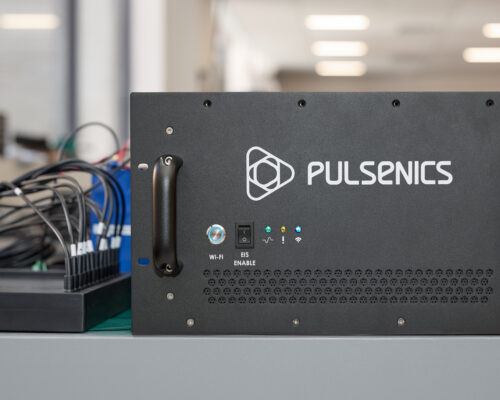
The partnership integrates Pulsenics’ proprietary Pulse Probe hardware with Endua’s green hydrogen stacks to deliver real-time performance monitoring under highly variable solar conditions. This information breakthrough helps hydrogen producers lower costs, extend asset lifetimes and build confidence in hydrogen as a reliable energy source.
“This is a world first,” notes Elsahwi, “OEMS now have access to powerful diagnostic solutions throughout the lifecycle of their systems. This gives them the confidence to guarantee performance and uptime to their customers and reduces risk for everyone involved.”
Such real-world visibility is increasingly critical as hydrogen production facilities become larger and more interconnected with renewable energy sources. Fluctuating power inputs from solar and wind can stress electrolysers, leading to degradation and failures that are difficult to predict. Pulsenics’ technology helps hydrogen producers detect those issues early and adjust operations accordingly, improving system lifetime and lowering maintenance costs.
Building the Future of Electrochemical Intelligence
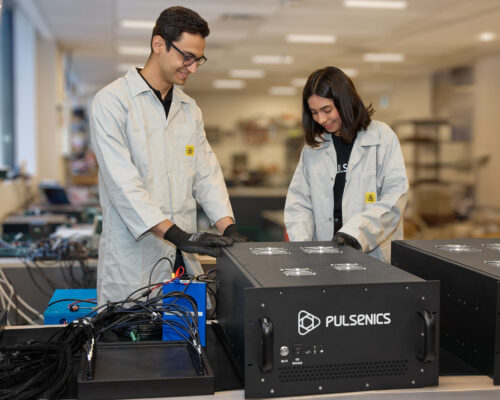
Beyond hydrogen, Pulsenics’ platform is being adopted across a range of electrochemical industries, from advanced battery manufacturing to carbon capture and electrochemical wastewater treatment. Its modular Pulse Hub system provides a central interface for monitoring multiple assets and interpreting complex data patterns, enabling predictive maintenance and improved lifecycle management.
As the clean energy sector matures, Pulsenics sees its role expanding from diagnostics to full-scale performance intelligence. The company’s roadmap includes deeper integration of digital twin technology, predictive analytics, and AI-driven models that can not only identify problems but also recommend optimal operating conditions. “Accelerating the energy transition means designing systems you can count on,” Elsahwi says. “Our mission is to make electrochemical systems reliable and predictable, so industry can move with confidence.”
Pulsenics also supports collaboration with academia and industry through its Academic Alliance Program, offering joint research opportunities, pilot projects, and data-sharing initiatives to advance electrochemical understanding globally.
A New Standard for Insight
Pulsenics provides the green hydrogen industry data continuity spanning product design, manufacturing, and operation. Its real-time, non-invasive diagnostics are giving manufacturers, researchers, and energy producers an entirely new way to see inside their systems, and to optimise them for performance, safety, and longevity.
In Elsahwi’s words, “Pulsenics makes the invisible visible.”