
Software Solutions
From Promise to Performance: the Role of AI and Autonomy in Hydrogen
November 10, 2026
Schneider Electric explores how AI, automation and autonomous systems can turn hydrogen’s promise into dependable, scalable performance across the energy value chain.
“Green hydrogen will only fulfill its decarbonisation potential if it can compete on cost. AI and autonomous operations are how the industry gets there.”- Devan Pillay, Segment President, Heavy Industries, Schneider Electric
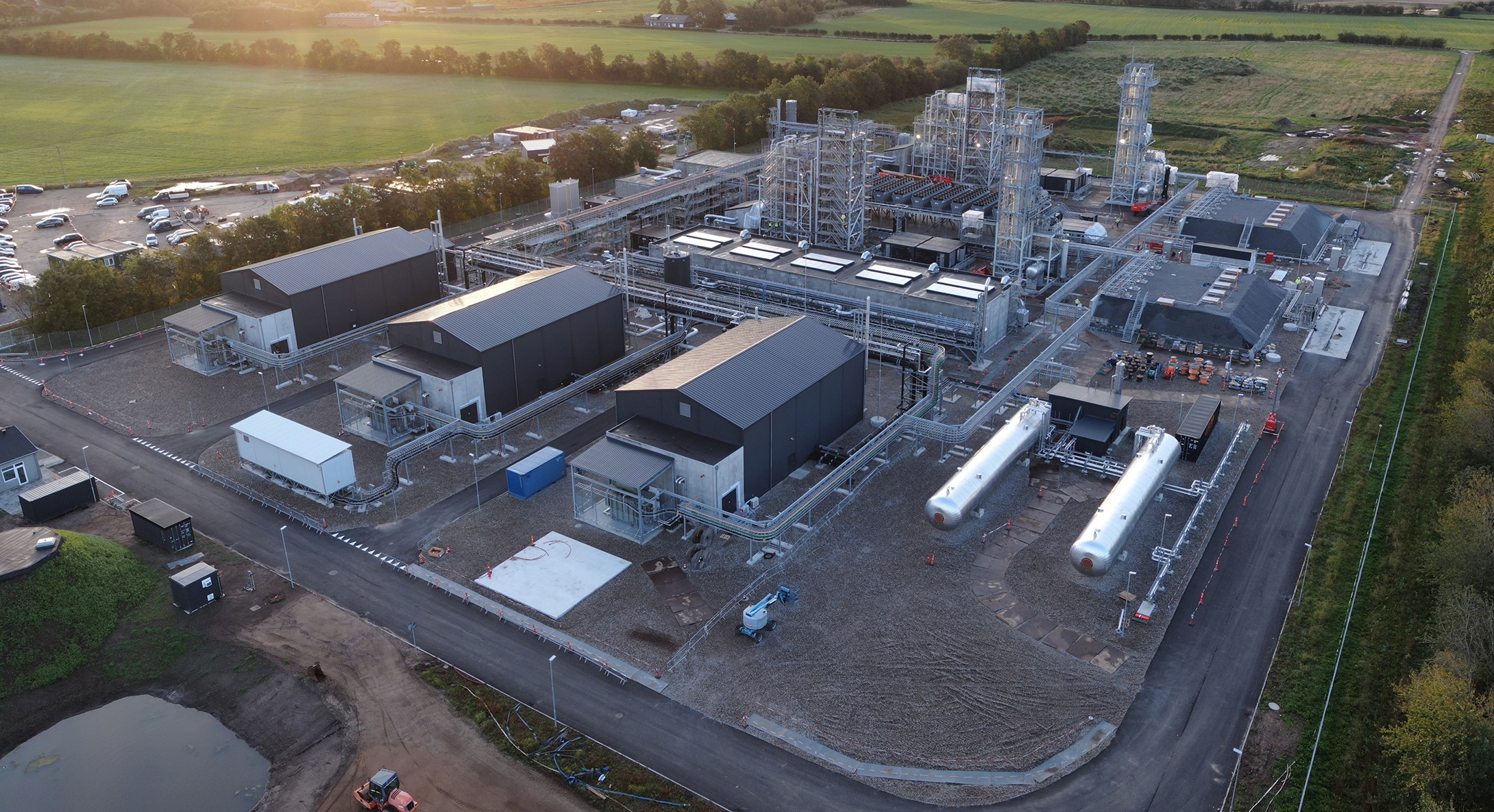
Green hydrogen will only fulfill its decarbonisation potential if it can compete on cost. AI and autonomous operations are how the industry gets there, writes Devan Pillay, Segment President, Heavy Industries, Schneider Electric.
Green hydrogen sits at the heart of global decarbonisation plans and it offers a route to cut emissions in sectors that have always been hard to electrify, from chemicals and refining to steel and shipping, by replacing fossil fuels as a feedstock and as a source of high-temperature heat.
Hydrogen’s long-term viability depends on one thing above all else, and that is driving down the levelized cost of hydrogen (LCOH) at scale. Electricity accounts for more than 70% of the cost of producing green hydrogen, and producing it cheaply and reliably, in the quantities industry needs, remains the sector’s main challenge.

AI and autonomous operations are emerging as one of the most effective ways to tackle the challenge head on. By optimising production in real time, reducing energy waste, predicting failures before they happen and enabling leaner operations, more autonomous, intelligent operations can move hydrogen from a promising technology to a genuinely competitive energy source.
Electrification, automation and digital transformation are converging across the energy sector, while AI itself is placing unprecedented strain on power systems. Data-center growth alone is expected to nearly double electricity demand from the sector to around 1,000 TWh by 2030. At the same time, operators face volatile energy prices, tightening decarbonisation targets and a shrinking pool of experienced engineers.
Together, these pressures demand operations that are more flexible, efficient and resilient than ever. In other words, industry needs to do more with less, and autonomy is the operating model that makes that possible.
Schneider Electric’s Global Autonomous Maturity Report, which surveyed 400 senior energy and chemicals leaders across 12 countries in North America, Europe, Asia and the GCC, shows the hydrogen sector at an inflection point.
Autonomy is now a strategic imperative with 82% of hydrogen leaders ranking autonomous operations as critical over the next five years, rising to 90% over a ten-year horizon. Progress is more advanced than many might expect with organisations reporting operating at around 70% autonomy today, with a target of 80% or more by 2030. Almost three in ten (29%) hydrogen leaders describe their pace of adoption as already rapid and accelerating.
Cost reduction, profitability and productivity top the list of main benefits, with almost a third (31%) of leaders naming optimized operations and lower costs among the main benefits they want from autonomy. When it comes to the technologies that will get them there, 36% cite advanced process control and optimization as the single most important enabler, while one in five point to the critical role of AI and machine learning (ML).
While the vast majority of hydrogen leaders see autonomy as critical, almost half cite a “lack of forward thinking” as the biggest obstacle to progress. Across the wider energy and chemicals sector, leaders also point to high upfront costs, legacy systems and organisational resistance as key barriers.
Hydrogen leaders warn that delaying adoption risks declining competitiveness and worsening talent shortages. In a market where margins are thin and capital is scrutinised closely, hesitation is itself a strategic yet expensive choice.
The good news is that autonomy in hydrogen is no longer out of reach and is fast proving itself in today’s operations. Solid oxide electrolysers (SOECs) offer the highest efficiency of any hydrogen production technology, but their demanding operating conditions have made them difficult to run autonomously. Limited real-time visibility and a lack of open, scalable automation have kept operating costs high.
Working with Microsoft and Indian green hydrogen pioneer h2e POWER, Schneider Electric has deployed India’s first fully autonomous SOEC system. The goal was to offer a practical, vendor-neutral path to modernisation, and one that doesn’t require operators to scrap existing investments or halt production.
The system combines open, software-defined automation from our EcoStruxure™ Automation Expert platform, which decouples software from hardware so applications can run across different equipment and vendors, with Microsoft Azure’s secure cloud, AI and edge infrastructure. An Industrial Copilot automates the engineering tasks that slow modernisation most (writing control logic, configuring systems and navigating documentation) with teams reporting time savings of up to 50% and changes that once took weeks now completed in hours.
The system continuously monitors and adjusts the electrolyser in real time, remotely managing thermal balance, hydrogen flow, energy inputs, safety and equipment health. ML models improve as operations proceed, and open standards keep the control logic fully portable.
The results are promising and show that autonomous operations is possible and, when done properly, it can be an effective source to improve output. The system has surpassed 6,000 hours of stable operation across part- and full-load conditions and demonstrated predictive maintenance. It has shown the potential to cut electricity consumption by up to 10%, while LCOH fell by up to 10% which is equivalent to around €500,000 a year for a typical 10 MW plant. Add improved energy efficiency and reduced stack wear, and operators can shift their focus from routine monitoring to higher-value, strategic work.
It also answers a question we hear from CIOs and plant leaders time and again, “can open, software-defined automation truly perform under real-world industrial conditions?” I believe that it can.
At European Energy’s Kassø Power-to-X facility in Denmark, the world’s first commercially viable e-methanol plant, green hydrogen produced with renewable electricity from the adjacent 304 MW Kassø Solar Park is combined with biogenic CO₂ to produce up to 42,000 tonnes of e-methanol a year.
Here, Schneider Electric and AVEVA are enabling AI-supported, self-optimizing operations with remote monitoring. Integrated process control and power management, combined with industrial intelligence, give operators real-time visibility across assets and networks. AI-driven digital twins allow the plant to “see”, understand and simulate its own behavior, optimizing performance before issues occur and driving predictive, self-governing workflows.
Many energy plants still run on proprietary, hardware-locked control systems that are expensive to update, slow to adapt and difficult to extend with industrial AI. Open, software-defined automation changes that equation, allowing operators to upgrade at the speed of software, not hardware replacement cycles, and to deploy AI at scale rather than in isolated pilots.
Cybersecurity must be considered and built in from the start as it was considered to be one of the most important enablers of autonomy, with energy leaders ranking cybersecurity second only to AI and ML as the most important enabler of autonomy over the next five to ten years. As hydrogen infrastructure becomes more connected, and more attractive to attackers, securing operational technology is the foundation on which everything else depends.
Today’s autonomous systems can be monitored and reconfigured remotely, and increasingly self-heal, detecting and correcting faults to keep operations safer and more resilient. They are proven to cut costs and emissions, while slow adoption increases both operational and regulatory risk.
For hydrogen to truly scale, it must compete, and to do this it must run smarter, and the organizations that act now will be the ones that define what the hydrogen economy looks like in the next 10 if not 5 years’ time when AI is expected to shift from an everyday tool to an advanced model.